

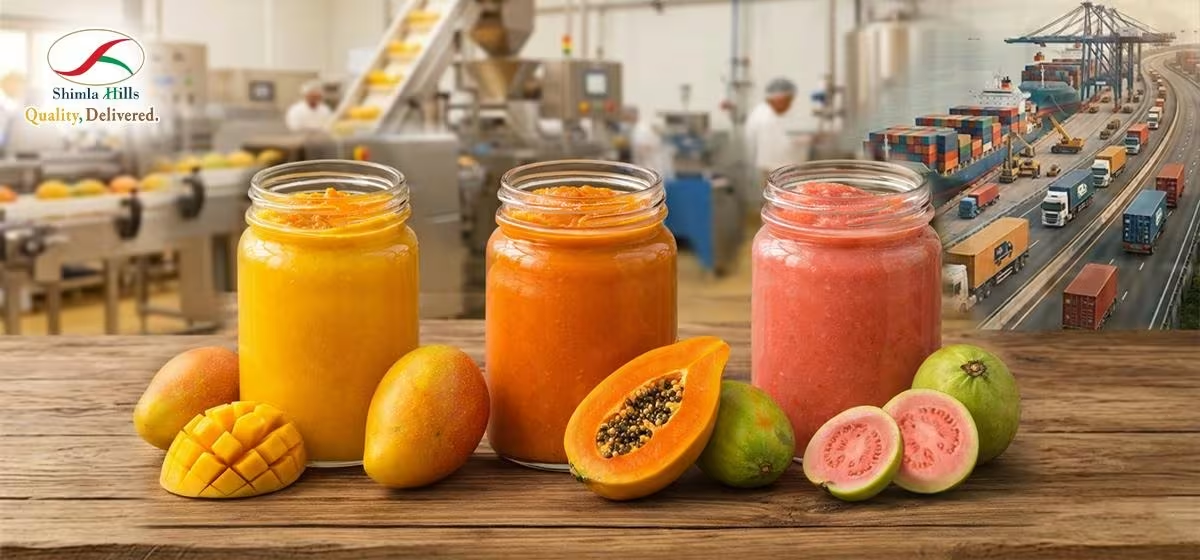
Food doesn’t simply move from one place to another anymore; it’s being carefully transformed before it reaches global consumers. For example, a mango grown in one part of the world may end up being used as a smoothie base thousands of kilometres away. Likewise, a freshly harvested tomato may be processed into a thick paste for use in various cuisines. This global exchange, therefore, is accomplished by companies that understand how to process, store, and ship ingredients on a large scale. Among them, Shimla Hills Offerings Pvt. Ltd. stands out in processing raw ingredients into globally usable formats, while bridging the gap between farms and factories across continents.
I. The Role of Food Processing Companies & Ingredient Suppliers in the Global Ingredient Supply Chain
Today’s global food ecosystem depends on all supply chain elements to function smoothly, from sourcing to the final delivery stage. A reliable food ingredient supplier provides manufacturers with safe, consistent, and ready-to-use materials for maintaining steady production operations.
Food processing companies and suppliers, therefore, play several critical roles:
- Standardization of Ingredients: They adhere to international standards that all batches must follow to achieve specific taste characteristics, texture profiles, and quality benchmarks.
- Year-Round Availability: Seasonal fruits are processed and preserved carefully to ensure year-round usage.
- Global Compliance: They comply with several international safety and regulatory standards, which are critical for exporting products to other countries.
- Bulk Production Support: They supply large amounts of raw materials efficiently to large scale manufacturers.
- Supply Chain Efficiency: With advanced processed food, they help reduce the reliance on raw produce that deteriorate easy with time.
A food manufacturing company can attain better operational certainty if it partners with a reliable fruit pulp supplier or fruit juice concentrate supplier. This partnership is beneficial, as they have to worry less about seasonal fluctuations. Instead, they can put more effort into creating new products and improving distribution processes.
That’s where experienced suppliers, like Shimla Hills and other global food suppliers, play a vital role. They not only provide processed raw ingredients but also enable consistency and scalability in food production worldwide.
Our Expertise in Processing: Aseptic, Canning, IQF & More
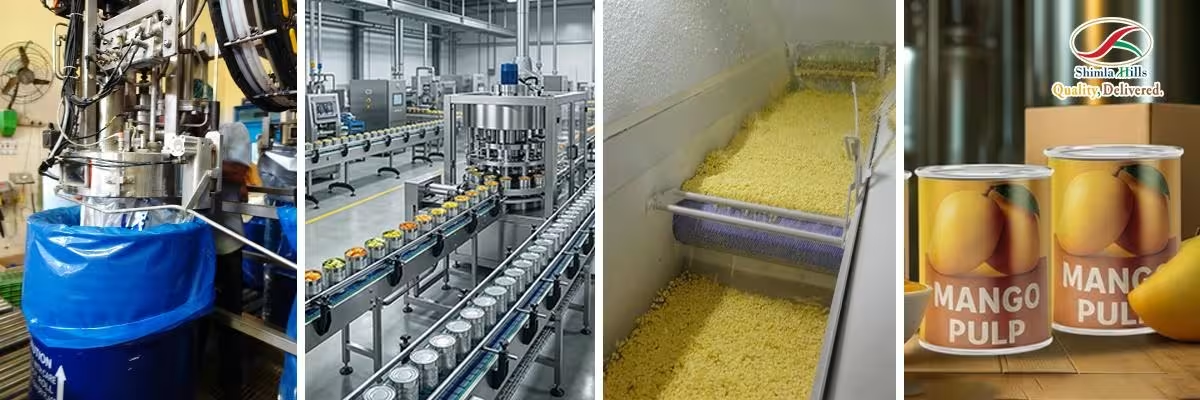
Shimla Hills Offerings Pvt Ltd utilises advanced processing technology that enables us to process food products according to international standards. As a leading food processing company, we provide a wide variety of natural food offerings tailored for global markets.
- Aseptic Fruit Processing
The method extends the shelf-life of processed fruits (without preservatives), offering efficient storage and transportation solutions for fruit juice concentrate and purees.
- Canning Solutions
This is another method that functions as an optimal solution for transferring bulk products to both manufacturing and retail distribution centers.
- IQF (Individually Quick Frozen)
Being a leading frozen fruit supplier, we leverage advanced IQF technology for retain the natural colour, shape, and texture of fruits. Consequently, IQF frozen fruits are ideal for bakers, dairy producers, and ready-to-eat meal manufacturers.
- Diverse Product Range
We offer a large selection of offerings, such as:
- Quality purees and concentrated fruit.
- Specialty fruit concentrates, including mango fruit concentrate and pulp.
- Customised fruit solutions for industrial clients.
In addition, our RTE and RTC food brand, ShimlaRed, meets the evolving innovative food demands of global customers. By having access to numerous processing techniques, we support food manufacturers worldwide with processed food ingredients in the most efficient forms.
II. How Manufacturing Plants Process Fruits and Vegetables for International Markets
An advanced food processing plant is a hub for precision, advanced technology, and hygiene. At our production unit, we carefully handle every step, from raw material to export-ready processed end produce.
- Sourcing and Sorting
Sourcing fresh fruits/vegetables from the farm is the first step. Then, it undergoes grading/sorting to eliminate substandard materials, ensuring only premium quality raw material is used for processing.
- Cleaning and Preparation
Fresh fruits and vegetables are cleaned, peeled, and cut using automated equipment to maintain cleanliness and efficiency.
- Processing Techniques
Processing varies according to final product type:
- Puree (fruit puree) using pulp production techniques typically done by specialised fruit pulp manufacturers;
- Concentration for juice-based products; and
- Cooking and blending of certain fruits, like tomatoes, by an expert tomato paste manufacturer.
- Preservation and Packaging
To extent the shelf life and quality of products, we adhere to certain techniques, like:
- Aseptic packing for liquid offerings.
- Freezing technology, such as IQF, for whole (or cut) fruit.
- Canning for long-term storage of fruits and vegetables.
- Quality Control and Export
Prior to being shipped out, food products go through stringent quality assurance processes before they will be exported worldwide.
All these steps allow a mango pulp manufacturer or a fruit puree supplier to deliver a consistent supply of food offerings that are suitable for global food brands.
III. How Ingredient Suppliers Enable Global Food Manufacturing
Ingredient suppliers play a strategic role in supporting food manufacturers. The contributions ingredient suppliers provide to manufacturers go well beyond just supplying.
They offer:
- Innovation Support: Helping food brands, for example, to form new products, flavours, etc.
- Cost Efficiency: Providing processed ingredients at reduced labour and waste costs.
- Customization: Customising offerings, like pulp, puree, or concentrate, based on specific clients’ needs.
- Scalability: Helping manufacturers to boost their production capacity without facing difficulties in material procurement.
For example, if a beverage company needs mango fruit concentrate, they do not need to handle raw fruit. Conversely, ready-meal manufacturers benefit by ready-to-use purees/pulps from trusted suppliers, like Shimla Hills.
With our consistent supply of processed natural food offerings to global clientele, we ensure customers’ production lines remain uninterrupted, despite their geographical locations or seasons.
FAQ's
1. What is the No. 1 food company?
Nestle is one of the top companies in terms of their global presence and highest revenue.
2. What are 10 processed foods?
Bread, cheese, canned vegetables, fruit juice concentrate, breakfast cereals, fruit puree/pulp, sauces, frozen meals, snacks, and processed meats are some examples of processed foods.
3. What is a food processor company?
A food processing company transforms raw agricultural goods into various marketable products, including pulp/puree and packaged food items.
4. What are the Big 4 FMCG companies?
The four major FMCG companies are Nestlé, Unilever, Procter & Gamble, and PepsiCo. On the other hand, Shimla Hills provides essential processed fruit ingredients to several global F&B brands for product formation.
5. What are the 7 types of food processing?
Cleaning, sorting, grading, processing, preserving, packaging, and then distributing products are included in food processing.
6. What does a food processing company do?
It transforms raw food materials into either complete products or half-finished goods. Meanwhile, they maintain safety standards, shelf-life requirements, and product usability.
7. What are the major food processing companies?
Nestlé, Cargill, Unilever, and PepsiCo stand as the main industry players. Additionally, Shimla Hills operates as a significant supplier of processed fruit solutions to food manufacturers worldwide.